Ted Williams replied on Permalink
They sit in a forgotten drawer in my tying desk, intermingling with odd-sized hooks, old fly boxes, and other ephemera that have eddied into this backwater over time. Some...

They sit in a forgotten drawer in my tying desk, intermingling with odd-sized hooks, old fly boxes, and other ephemera that have eddied into this backwater over time. Some...
Words: Todd Tanner. Images: Tim Romano and Jeremy Roberts.
There are days when I’m not convinced our society can tell the difference between a blessing...
|
|
|

It’s not often that a place sings to you, and calls you in. Some places play more alluring tunes than others, and, while I think it’s safe to say that anglers hear siren...

The U.S. Forest Service is in damage control.
Almost two weeks ago,...
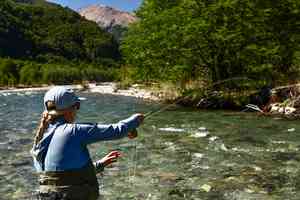
As I unzipped the top of the Cordura-coated rod tube in the front yard of a little Chilean farmhouse not too far from the cozy confines of...
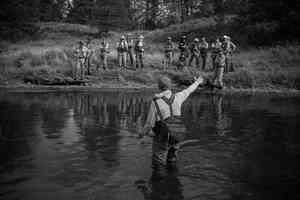
Beginning this month, we’re introducing a new column in partnership with the Montana-based...

The ongoing western drought has claimed perhaps its biggest victim — a trophy trout reservoir in the upper reaches of the South Platte River drainage in Colorado’s fabled...







Thanks for this excellent piece.
There is no enemy of native fish more dangerous than Wilderness Watch. All across the West it blocks and delays use of rotenone -- in almost all cases the only tools available for saving native fish from extirpation or extinction.
Log onto the website of WW, and you’ll encounter a rendering of a grizzly. Icons of wilderness like grizzlies count for WW, but not icons of wilderness like Yellowstone cutthroat trout. They’re cold, slimy, featherless, furless, and unseen by WW are routinely issued.
And Buffalo Creek was almost certainly not naturally “fishless” in recent geologic history. “To say fish were never there is a pretty arrogant statement. Did they walk the earth with woolly mammoths?” remarks Lolo National Forest district ranger, Quinn Carver.
“When it comes to rainbow-trout mitigation, the Buffalo Creek project is the biggest and most needed we have,” says Dr. Todd Koel, who leads the park's native fish conservation program. “In spring the big migratory cutthroats move from the lower Lamar Valley up into the headwaters in the remote backcountry to spawn. Then in summer and winter they return to the lower river. Hybrids and rainbows do the opposite; they’re mostly concentrated downstream in the Lamar Canyon and lower river. So for now we have this separation. But if we were to let everything go, we’d lose the entire Lamar system and end up with what’s happened in many other large river systems around here -- just big hybrid swarms.”
“The narrative [of WW and allies] is rife with falsehoods,” declares Montana’s recently retired Yellowstone cutthroat biologist Carol Endicott, citing among other WW’s claim that “hundreds of gallons of rotenone” will be used to treat Buffalo Creek. “All rotenone-based piscicides currently available have a concentration of five percent rotenone,” she says. “So the amount of actual rotenone for two treatments of 47 stream miles and Hidden Lake is 4.2 gallons. [WW] is accusing us of trying for a recreational fishery, as if that would be bad. Buffalo Creek, currently teeming with rainbows and hybrids, is barely fished as it is. Our crews have been up there a lot and have never seen an angler. You have to hike ten miles through grizzly country to reach it, and it’s not a day trip.”
Allying itself with WW and other opponents of this and other genetic and thermal refuges is the Native Fish Coalition. Throughout the spring of 2022 I pled with CEO Bob Mallard to talk with Koel and Endicott before publishing a FAQ which now reads: “We…do not support introducing [trout] to previously troutless, or fishless waters.” He declined. Had he complied, he’d have learned that the Buffalo Creek project is part of an MOU with the U.S. Fish and Wildlife Service and other agencies to keep Yellowstone cutts off the Endangered Species List and that the creek almost certainly sustained Yellowstone cutts in recent geologic time.
“I cannot imagine the hubris of publishing something without speaking to the biologists leading the project,” remarks Endicott. “That is incredibly irresponsible. They’re free to make their own operational definition of ‘historically fishless,’ but their definition is at odds with our legal responsibility. It ignores the concept of metapopulation dynamics where waters open and become blocked over time. I know of beaver dams that have blocked fish movement for hundreds of years. Then they go away and fish move in. Same with waterfalls, especially those sitting in the world’s largest super volcano. Under policy required by law, historically fishless waters are within the historic range, and we can legally put fish in them if they don’t harm other species. They coevolved with everything up there. The current barriers that block fish don’t block invertebrates and amphibians. They easily fly, drift or hop past these features. No harm, only benefit.”
The Native Fish Coalition’s FAQ left me no choice but to resign as National Chair in June 2022, a painful decision because I co-founded the outfit in 2017 and was far and away its major fundraiser.