
There’s a creek freak in all of us. No matter where we fish, what we chase, or why we do it, down deep in our soul is that little kid who used to stop their bike atop the bridge over the local creek and stare over the guard rail down into the water, hoping to see something swimming below. These small waters very likely served as our introduction to fishing and, in time, to that fateful moment when we gripped and wiggled a fly rod for the very first time.
For some of us, the next logical step in our fly-fishing game was “moving up” to bigger water, larger fish, and more “challenging” situations. But some of us, like those undersized brook trout swimming in black-bottomed beaver ponds on the shoulders of some remote mountain range in the Rockies, we stunted. We stayed back, caught up in the small-stream rapture, where wild fish swimming in wild country gripped our fishy imaginations.
Maybe, in time, we looked up from our obsessions with small streams and the trout that swim in them, and moved on to other fishy pursuits. But our origin stories are firmly rooted in winding meadow creeks, forested Appalachian brooks, and beaver-dammed streams that shelter the fish of our youths. And, no matter how old we get, or how challenging it becomes to traverse these off-the-beaten path fisheries with forgettable names, we return to the beginning every chance we get. These places are in our blood.
And, for creek freaks everywhere, the fly rods we use tend to be just as stunning as the waters we fish. Unassuming and small, yes, but beautiful in the eye of each beholder, light-weight fly rods are the vehicles we use to return to the waters of our past. Like the hidden destinations we seek out with fingers following blues lines on the map, these light and supple fly rods worm their way into our hearts, becoming a part of our treasured experiences on the water. Made of fiberglass and, sometimes, graphite, and blessed with names like the F-series, the Butterstick, and the Seven/Eleven, these diminutive “creek rods” are our implements of choice for fish that make up for their lack of stature with a backcountry life force that swells their value to anglers like us.
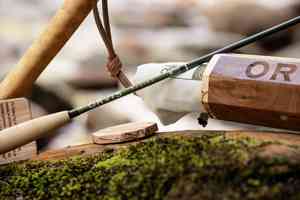
Recently, I got the chance to fish Orvis’ next iteration of the venerable creek rod — the new Superfine Graphite. With a storied history of crafting quality small-stream fly rods stretching back decades, Orvis must tread lightly when it comes to “reinventing” anything. And, in the case of the Superfine “Seven/Eleven” — a rod treasured by creek freaks like me since the 1970s, the legacy rod builder is putting its reputation on the line. While some might skeptically wonder, “Why fix something that’s not broken?” or perhaps suggest that Orvis is offering a solution for a problem that doesn’t exist, let it be known that the company’s new 7-foot, 11-inch, 4-weight graphite fly rod is worthy of its ancestry.
Let’s be honest. As Orvis has virtually reinvented its entire line of fly rods with the advent of its Helios tech, a new light-weight line of graphite creek rods had to be next, right? And, in the form of the Superfine Graphite, the Seven/Eleven looks pretty damned good. After putting it through its paces on the Arctic grayling streams of the southern Yukon, I can attest that it fishes pretty damned well, too. The handsome, lightweight rod with a hall of fame name does, indeed sport some notable assets.
What works
Recovery
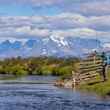
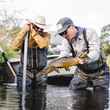
On a little creek channel between two lakes in the Yukon’s Kluane National Park, sizable Arctic grayling stack up below a frothy rapid. The fish are seldom bothered, and they rise with abandon to everything from flitting mayflies to dancing caddis. Anglers willing to go deep with nymphs and small streamers can get into the creek’s bigger fish, and, with the new Seven/Eleven, all of these options are on the table.
Yes, without a doubt, the Seven/Eleven is still a light-weight creek rod. And, even though it incorporates Orvis’ new Helios tech, which has become famous in the last several years for its speed and strength all wrapped up in a lightweight package, the new Superfine remains true to its roots — it’s supple and lively when a fish comes calling. But it really shines on the cast, where its Helios genes shine through. Its power is admirable, and its lift-and-load capability is likely best-in-class. But what I appreciated most about the new rod is its virtual lack of memory — there’s no wiggle on the cast. It delivers line, just like it’s supposed to, with near perfect recovery after the cast. Not many creek rods can make that claim.
Long and short
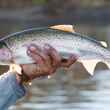
Some aren’t going to like the faster-than-usual nature of the new Superfine Seven/Eleven, and I get that. But don’t mistake the rod’s moderate speed and its ability to make effortless casts over open water for some lack of “feel” or a perceived inability to function at closer quarters. On a small stream just a short walk from the comfortable confines of Dalton Trail Lodge, the new Superfine, in the hands of three different anglers, landed dozens of grayling ranging from a foot long to some topping 16 inches, all with less than five feet of fly line stretched outside the rod’s tip. What I can only assume is Helios wizardry, the Superfine has the ability to roll cast a size 10 hopper pattern over a wide river channel and the nuance to dap a size 16 Adams over a school of grayling gathered in the water, virtually at the angler’s feet.
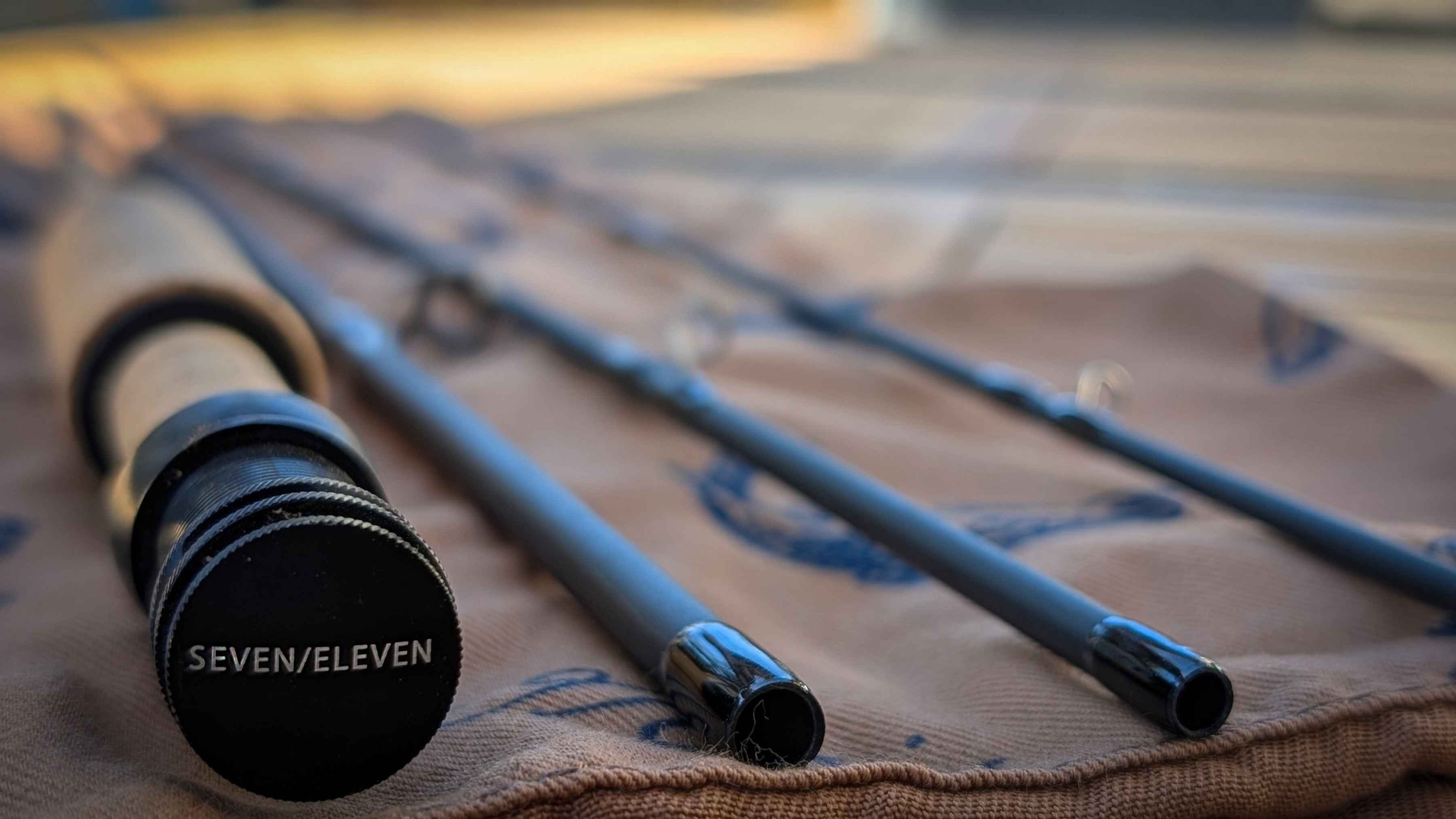
Again, the middle-action speed and the spine of this rod give it outsized power, but, in line with the Superfine’s storied past, Orvis’ new offering works just as well performing steeple casts and bow-and-arrow deliveries under a willow canopy. This is likely because, in its line of Superfine rods, Orvis uses a lower-modulus graphite, which slows the rod down and gives it an appreciable bend. This allows it to load with less line and perform well in tight cover.
It’s light
Orvis doesn’t disclose the exact weight of the Superfine Seven/Eleven, but it’ll be the first thing you notice if you opt to pick one up. It’s not a noodle, but the less-than-rigid graphite construction makes it comfortable and light. You’ll really notice it when you let some line out and send it across the creek. For small-stream aficionados, the Seven/Eleven is the ideal hopper-season stick — where lighter, smaller glass and graphite rods might struggle with a Chubby Chernobyl, the Superfine simply won’t. And all that without having to size up to a “standard” 5-weight.
What doesn’t
The reel seat
Yes, it’s perfectly functional. But, in its clear attempt at keeping the rod light, the simple black anodized aluminum and stamped cork reel seat serves to give the rod an “industrial” feel. Of course, it’s not a performance problem, but merely an aesthetics quirk that’s a product of the desire for function. Perhaps a better option would have been a nice, polished rosewood insert on the reel seat and single-foot snake guides substituted for the universal guides the rod employs. Just a thought.
Rod sock clip
The gorgeous, old-school divided rod sock oozes Orvis nostalgia. The chintzy plastic clip that closes the sock before it’s deposited into the rod case does not. In time, this clip will fail. And there’s no need for it. A couple of durable cloth fasteners would work just fine, and they’ll work virtually forever.
Final word
Orvis can be proud of its new Superfine Graphite fly rod line, and I love the Seven/Eleven. It’s the ideal implement for small to mid-sized trout water and probably a good call for small-water panfish, too. And, because of its graphite construction and Orvis’ proven Helios technology, I’d be tempted to put this rod to work on spring creeks, where light presentations and accurate casts are a must. As it is, though, it’s a lovely small-stream implement that would work well for any angler interested in a touch more power and accuracy for small-water angling, without the troubling wiggle at the end of a longer cast. This iteration of the Superfine lives up to its legacy.












Comments
Kyle replied on Permalink
Chris, do you like the Scott F2 more than the superfine glass?
Pages