
On Wednesday morning, in Room 366 of the Dirksen Senate Office Building, with no hearing, no public notice beyond a leak the night before, and all the legitimacy of a pickpocket working a crowd, the Senate Energy and Natural Resources Committee approved an amendment to kill the 2001 Roadless Rule. Not weaken it. Not “modernize” it. Not return it to the states. Kill it — by statute, forever, beyond the reach of any court, any future president, any forester, and any of the millions of Americans who built it. The man holding the gavel wrote the amendment himself.
Mike Lee, the chairman of the Senate committee with jurisdiction over your public lands, attached his rider to Senator John Barrasso's Wildfire Prevention Act and pushed it through on a strict party-line vote of 11-9, every Republican voting for it and every Democrat against. He filed it late Tuesday night. He didn’t announce it beforehand. He didn't defend it in a hearing. When Politico's E&E News obtained a copy and asked his office to comment, he didn't respond. Forty-five million acres of the wildest country left in America, and the man taking it wouldn't return a phone call about it. As is his usual custom.
What Lee Just Did
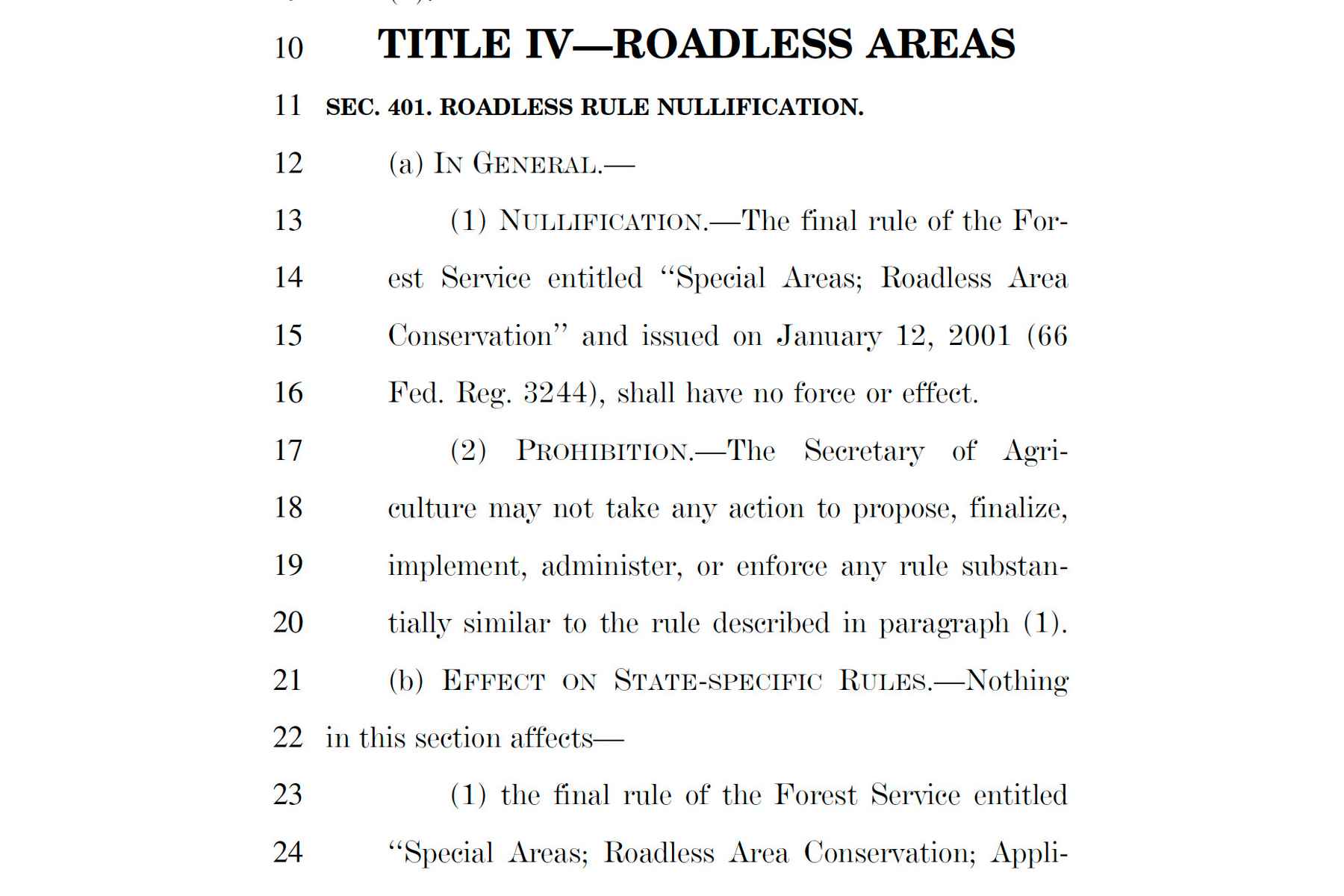
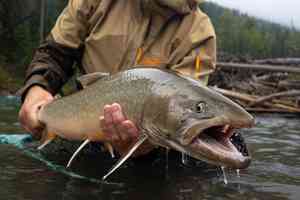
The amendment is titled, with the bluntness of a ransom note, “Roadless Rule Nullification.” According to the text obtained by E&E News, it erases the 2001 Roadless Area Conservation Rule outright, stripping protection from millions of acres of national forest across thirty-seven states. It throws open the last great intact backcountry in the national forest system — the old-growth salmon forests of the Tongass, the trophy elk country of Montana’s Elkhorns, the headwater streams where native brook trout still hold out in the East — to road construction and commercial logging. And it does something the Trump administration’s own repeal campaign can’t do: it prohibits the Forest Service from ever issuing similar roadless protections again.
That last provision is the confession. For a year the administration has sold its repeal as "restoring local decision-making to federal land managers." Fine. If you trusted local forest managers, you'd let them manage. Lee’s amendment forbids them from managing. It reaches forward through time and handcuffs every future forester, every future administration, every future public who might want these places kept whole. This was never about local control. It’s about making sure that when the bulldozers move in, nothing on earth can ever move them back out. He’s salting the ground behind him.
Idaho and Colorado are carved out, since both negotiated their own state roadless rules years ago. Everyone else loses. Thirty-seven states. Forty-five million acres. The drinking-water headwaters of communities across the country. Seventy percent of the nation’s roadless areas provide crucial habitat for native trout. A quarter century of protection. And he moved on all of it with a rider, on a Tuesday night.
The Numbers He’s Running From
To understand why Lee did it this way — the rider, the leak, the silence — you have to understand the numbers he’s up against, because they may be the most lopsided in the history of American public policy. When the Forest Service built the Roadless Rule a quarter century ago, it ran one of the most exhaustive public processes in the history of federal rulemaking: more than 600 public meetings across the country and about 1.6 million written comments, the largest response any federal agency had ever recorded for any proposed regulation, before or since. Over 90 percent of those comments favored the rule, and most of the supporters wanted the protections made stronger. The agency itself, in the final rule, pointed to “the sheer volume of comments received” as “compelling evidence” that the public had spoken and been heard.
Fast forward to now. When this administration opened its own repeal for public comment last fall, more than 625,000 Americans responded, and 99 percent of them opposed it. Ninety-nine percent. In a country that can't agree on the day of the week, Americans have now said the same thing about these forests for twenty-five consecutive years, in the largest public outpourings ever recorded, under administrations of both parties. No regulation in American history carries a mandate like this one.
And that mandate is precisely Lee’s problem. The Trump administration’s current repeal effort has to crawl through the Administrative Procedure Act — the notice of intent, the comment periods, the environmental impact statement, a final rule expected late this year — and the moment it’s final, it gets sued. Earthjustice is waiting. Tribal nations are waiting. State attorneys general are waiting. A repeal built on a public record this catastrophic has to survive judges, and it has to survive the next election, because what one president’s pen does, another’s can undo. Lee knows all of this. So he reached for the one instrument that answers to none of it. A statute requires no comment period. A statute requires no environmental review. The one door left is a constitutional challenge — a far narrower and much more difficult road than the lawsuits already waiting on the administrative repeal — and short of that, Congress repealing a rule by law is simply the law.
One rider, and millions of public comments become scrap paper. One rider, and every pending lawsuit dies of natural causes. One rider, and the most documented public mandate in regulatory history gets converted, permanently, into nothing.
There's a word for using legal machinery to defeat an outcome you can't win on the merits, and the word is lawfare. Mike Lee can't win the argument about these forests. He has known the polling, the comments, and the country's answer his entire career. So he's not making the argument anymore. He's using his gavel to make the argument irrelevant — to take the question of whether America's last wild forests should survive, settle it against them, and weld the lid shut.
Remember Mike Lee?
None of this is out of character for Mike Lee. Prying Americans’ public lands loose and handing them to industry has been the work of his entire career, and he’s never once done it in the open, because in the open he loses. He doesn’t fear losing the debate. He fears having it. So he hides in process, crawls into someone else’s must-pass bill, and lets the legislation and his poison do quietly what he’d never defend out loud.
You've watched the ritual before, and recently. Last June he wrote a mandate into the reconciliation bill forcing the sale of between 2.2 and 3.3 million acres of Forest Service and BLM land across eleven western states. The country caught him — 1.87 million people clicked on a single threat map, more than a hundred organizations mobilized, and the Senate parliamentarian struck the provision. So he shrank it to up to 1.2 million acres of BLM land dressed up as a housing program, got caught again, the public outcry returned, and he withdrew the whole thing with his usual performance of listening to concerns. Caught, shrink, retreat, return. Every session the same obsession in a new costume. The language changes. The goal never does.
What did change is the gavel. For years Lee had to do his work from the margins — a single member of a committee he didn't control, slithering through the halls of the Senate with one crackpot scheme after another to liquidate the American estate, and getting overruled by adults from both parties. His own colleagues found him exhausting. Then, on January 3, 2025, when Republicans took the Senate, Mike Lee became chairman of the Energy and Natural Resources Committee — the panel with jurisdiction over nearly all of your public lands. The snake got the chair. The senators who once rolled their eyes at his antics now have to come through him to move anything at all, and by his own ranking member's public account he runs the place "unilaterally," freezing Democrats out of work that chairmen of both parties have always shared. He no longer needs to sneak past the people in power. He is the people in power. And his first great act of forest policy as chairman was to bolt a forever-repeal onto another senator's wildfire bill and gavel it through before most of the country ever heard it was coming. Most of it still hasn't.
The Wildfire Lie
Now for the costume, because the vehicle was chosen with care. A wildfire bill is the perfect host — thinning targets, prescribed fire, the comfortable language of forest health that all too many nod along to. And, to be clear, this host is far from innocent. Barrasso’s Wildfire Prevention Act arrived with a slate of Republican cosponsors and not a single Democrat, built around mandatory thinning-and-logging quotas that ratchet up to forty percent above recent levels by 2029, plus a stack of categorical exclusions and NEPA carve-outs that let projects skip environmental review. It's a bad bill. Yet even Barrasso left the roadless areas alone. Probably because the timber up there is too remote and too expensive to be worth the fight, and because he knew that reaching into it would turn his own bill radioactive. But Lee, a born saboteur who's never met a clean bill he couldn't foul, jammed it in anyway.
Lee has rehearsed the act for at least a year, declaring at a hearing last July that the Roadless Rule’s actual impact “has been an environmental disaster” and blaming it for worsening fire seasons. His House counterpart Harriet Hageman of Wyoming calls the rule “an environmental catastrophe,” and the administration’s logging-executive Forest Service chief dutifully testifies on cue. So let’s examine the wildfire argument.
Start with the rule itself, which they're betting you've never read. The Roadless Rule has always contained explicit exceptions permitting road construction and tree cutting to protect public health and safety from imminent threats, fire named among them, and permitting fuels treatment to reduce the risk of uncharacteristic wildfire. Taxpayers for Common Sense, a fiscal watchdog with no environmental agenda whatsoever, reviewed the record at the House hearing on Hageman's twin bill and concluded flatly: "The Roadless Rule has not prevented wildfire mitigation activities." The foundational premise of the entire repeal campaign is contradicted by the text of the rule and twenty-five years of its operating record.
And it gets worse. At that same hearing, Trout Unlimited's Chris Wood, who helped write the rule as a senior advisor to the Forest Service chief, testified that "85% of all wildfires are caused by people, and 78% of them start within a half a mile of a road." And the administration's own Forest Service deputy chief, Chris French, confirmed it under questioning, calling it "a longstanding fact that, if you look at the point of ignition for wildfires, most are human-caused and most are going to be associated where humans go, including roads." Roads are where fires start. The administration's second-ranking forester confirmed it to Congress, on the record. And the inverse is just as damning: a 2007 study found that fewer than 3 percent of all wildfires start in wilderness or backcountry. Lee's amendment proposes to fight fire by carving roads, the leading delivery system for wildfire ignition, into the forty-five million acres that currently have the fewest of them. And when those forests burn in the years ahead, the ignitions will trace back to this vote, to a wildfire bill, while Mike Lee sits somewhere comfortable, retired and laughing, his donors paid in full.
Supporters of this amendment, if you can find them, will tell you the backcountry sits untreated, locked away from management. False again. Trout Unlimited's Roadless Report found that roadless areas hold about a fifth of the tree cover in the national forest system yet account for roughly a third of all fuel treatment acres — proportionally more treatment, not less, because the rule's exceptions work exactly as designed. The Wilderness Society notes that the Forest Service's own Rocky Mountain Research Station has documented substantial fuel treatment and fire-risk reduction work inside roadless areas. The forests they claim are abandoned are among the most actively treated in the system.
Then there's the money, the argument the original rule was actually built on. The Forest Service already manages 370,000 miles of roads, enough to circle the globe nearly fifteen times, and more than half of the agency's roughly $10 billion deferred maintenance backlog is those existing roads crumbling in place. "The rule was based on economics," former Forest Service Chief Mike Dombeck told Field & Stream. "We just couldn't afford the road system that we already had." The same movement that gutted the agency's budget, purged its workforce, dismantled its leadership, and shuttered its research stations now wants to repeal the rule that helped keep that road debt from growing, and throw open forty-five million acres of the steepest, remotest country it manages to new roads and chainsaws. The self-styled fiscal conservatives want to drown a bankrupt road system in more road.
The rule never blocked firefighting, by its own text and by the assessment of a fiscal watchdog. Roads start fires, by the testimony of the administration's own deputy chief. Roadless country already receives proportionally more fuels treatment, by the agency's own research station. The road system is a ten-billion-dollar liability the agency admits it can't afford, by the word of the chief who wrote the rule. And the host bill itself went so far as to carve roadless areas out of its wildfire work. There’s no wildfire argument left standing. There never was one. What's left is what was underneath the whole time: forty-five million acres of standing timber and minerals that the people bankrolling this movement have coveted for generations, and a senator willing to launder the taking through a fire bill.
Two Ways to Write a Law About a Forest
If you want to see the difference between legislating and looting, this committee currently offers both under one roof. Senators Ruben Gallego and Maria Cantwell, members of the same panel, have a bill, the Roadless Area Conservation Act, that would write the Roadless Rule’s protections into permanent statute. It was introduced in the open with named sponsors, given a public legislative hearing with witnesses and questions, and made to stand on its merits in front of the people whose land it concerns.
Lee chose the opposite at every opportunity. A rider instead of a bill. A leak instead of an announcement. Silence instead of answers. A vote within hours instead of a hearing. Both sides are trying to write lasting law about the same forests, and only one of them is doing it where you can watch. When 99 percent of the public stands against you, the public process is your enemy — and eliminating the public from the process stops being a side effect and becomes the entire design.
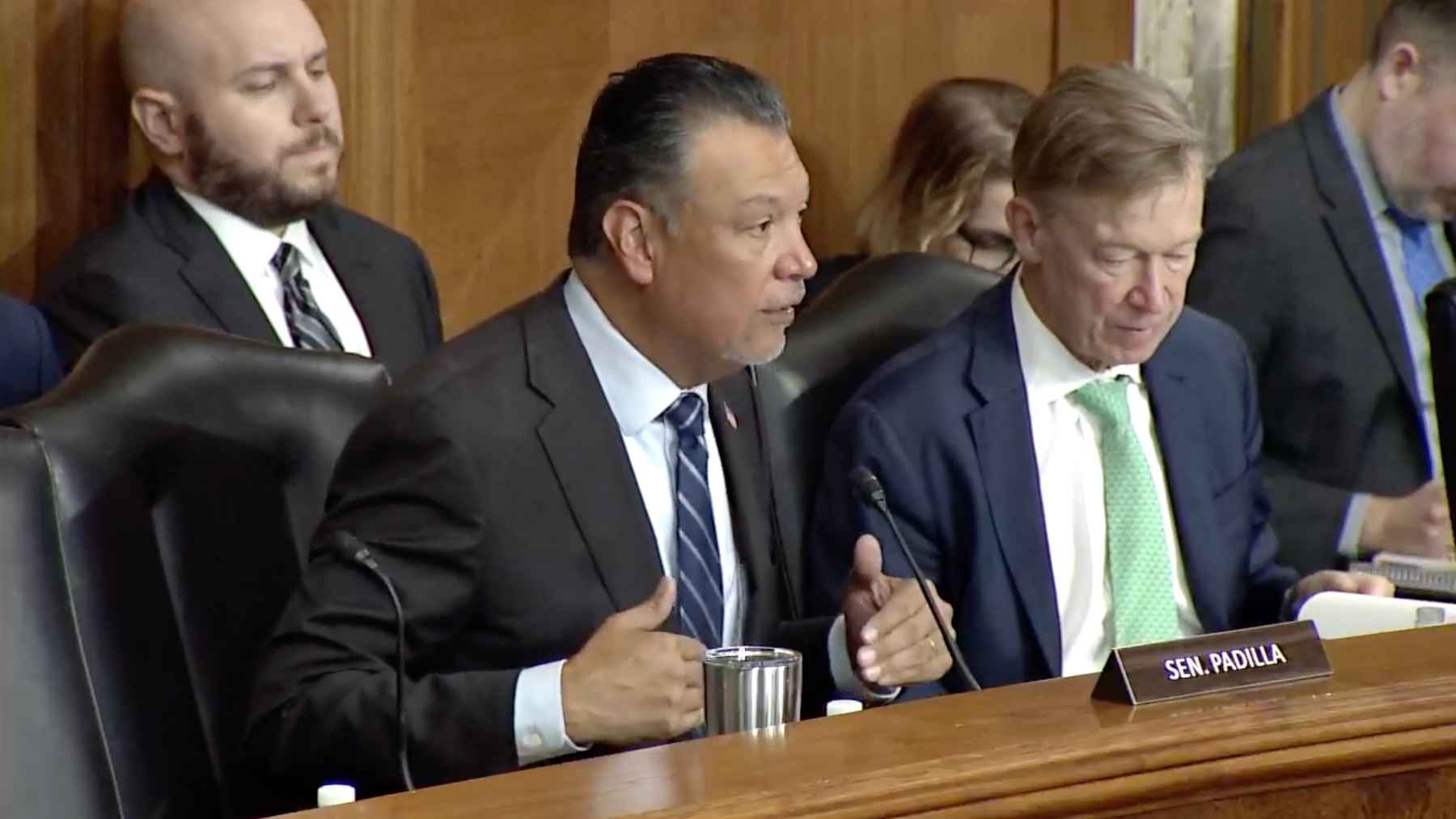
That contrast wasn’t lost on the Democrats in the room. Ranking member Martin Heinrich called the wildfire bill “a trojan horse for the Roadless repeal.” Senators John Hickenlooper and Alex Padilla called Lee’s amendment a “poison pill.”
Turn On the Light
Twenty-five years ago, more Americans raised their voices for these forests than had ever spoken up for anything a federal agency proposed, before or since. They never stopped. Ask them in 2001 and they say protect it. Ask them in 2025 and 99 out of 100 say protect it. There is no constituency in this country for what happened in Room 366 on Wednesday morning beyond the extraction industries that fund the movement and the senator who carries their water — a man who has tried to sell your land, shrink your monuments, and crack open your wilderness so many times that getting caught has become his legislative signature.
The committee was the easy part and Lee knew it going in. He owns the committee. But now the rider moves toward a Senate floor where it needs sixty votes, and where a hundred senators will decide, names recorded, whether to hand them over. Every one of them should have to answer the question out loud: do they support nullifying the Roadless Rule, and do they believe the ninety-nine percent of Americans who don’t are wrong. Make them answer with the lights on. When the light goes on, the rats scatter. It’s the one law Mike Lee has never found a way around.

























Comments
Travis P replied on Permalink
Great article
Patrick replied on Permalink
Thanks to Jim Pattiz for writing this piece, and to Hatch for publishing it.
Lee is the ringleader in a rogue's gallery of despicable anti-public lands Utah legislators.
Michael Hamilton replied on Permalink
Mike Lee is an abomination. He is an evil, despicable human filled with arrogance and ignorance. He is the poster child for self serving greed and incompetence. By contacting our state senators to oppose Lee’s back room shenanigans, we will symbolically Insert his gavel where the sun doesn’t shine.
Kerry replied on Permalink
Thank you for posting.
Mike Lucas replied on Permalink
Thanks for this great article. Once again this current administration is showing what it's all about and Mike Lee is the epitome of evil.
Anonymous replied on Permalink
Great article! Inspired to write my Senators and encourage them to act as rationale adults and not support the bill with Sen. Lee’s language in it.
Pages