

When John Juracek, and I published our little book, Fishing Yellowstone Hatches, we wrote in the book’s introduction how a knowledge of insect hatches can improve angling success and that anglers should take an interest in insects because they are the root of our sport—without them there is no basis for fly fishing.
John and I are honored to be instructors in Todd Tanner’s wonderful School of Trout each fall, along with several other great teachers. We have become great friends, and are told by our students that our passion for fly fishing is infectious. The students come away from the school anxious to get on the water and apply what they’ve learned. I have run into several on stream or in fly shops after they completed the school. The one thing they always comment on is how much they learned and how important it has been to their personal angling success. I always ask them what aspect and topic covered in the school stands out the most to them. Overwhelmingly, their responses echo each other's: how to understand and fish insect periods, specifically caddis activity, on their home waters (and those of Yellowstone country when they fish here).
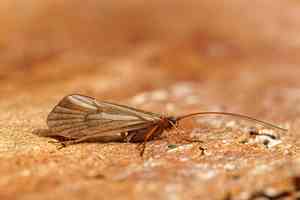
I have been in the fly fishing business for over 50 years. I’ve outfitted, guided, and instructed thousands of anglers and have owned and stood behind the counters of four fly shops from Montana to Arkansas, talking to thousands of fly fishers and answering their fishing questions as best I could. The one thing that sticks with me and my hardcore fly fishing friends, shop employees, instructors, teachers, and professional guides is that caddisflies are the insects least understood by fishermen, yet are important to both trout and anglers fishing Yellowstone and their home waters. Caddisflies are as significant as mayflies and stoneflies, and a knowledge of basic caddis habits are essential for successful angling during much of the season.
We have discovered that it is caddis emergences that confuse anglers. Being able to recognize when caddis are hatching is the first critical step to understanding which will lead to successful angling opportunities.
Our old friend, Gary LaFontaine, in his book Caddisflies notes three important clues that point to caddis emerging on rivers. First, trout will be seen leaping in the air when they chase emerging caddis pupae to the surface when their momentum carries the fish out of the water.
The second clue is that there are no insects on the water. While you might see thousands of caddis in flight, these are insects that hatched days prior and are merely in a mating flight. Even during the heaviest of caddis hatches, adult caddisflies are just about impossible to see drifting along on the currents. Most caddis hatch and fly off the water unnoticed, which always amazes us. We have crawled on our hands and knees, and held our noses at water level just downstream of several trout rising like wolves to caddis hoping to see and capture a sample insect, but it is a miracle if we find even one.
The third and final clue, according to Gary and confirmed in our experience, is when most feeding fish are bulging, splashing, and porpoising as they take pupae from the surface film and turn downward to their feeding position. The riseforms are usually dependent on the speed and depth of the current the fish is feeding in rather than the food being taken. In faster water bulging and splashing often occurs, but in slower water where larger trout prefer to take emerging caddis pupae, it is most common to see quiet porpoising rolls, tails and dorsal fins breaking the surface.
The strongest clue that a caddis hatch is underway is when no insects are seen on the water and yet fish are rising. This is usually the best indication that caddis are emerging, and you better be prepared to fish them!
In summer, late June to mid-August, when most caddis species emerge on most western rivers and those in Yellowstone Country, I like to arrive around 8 PM. I am usually amazed how many anglers are calling it a day, walking off the stream while I drive into a parking spot. By leaving then, these anglers are missing some of the most exciting dry fly action of the season.
I never rig my rod at my vehicle. I walk to the river, pick a spot along the shoreline behind a boulder adjacent to heavy, deep fast water where big trout hide from anglers and osprey during daylight hours. I sit on the bank, watch the water for insects, and for trout working them. I tie on fresh tippet and knot on an X-Caddis or Iris Caddis pattern that matches the species I expect to find emerging.
Let’s assume it's mid-July, and the most important caddis species to anglers and trout on Yellowstone country’s waters, especially the Madison River downstream of Earthquake Lake, Hydropsyche sp are hatching. Sitting on the bank watching water as the sun begins to slip behind Freezeout and Cave Mountains, I get excited knowing I will soon be casting to big, wild, selective brown and rainbow trout. At first, I might observe female caddis releasing their eggs by bouncing on the surface. If there are egg-laying caddis, I will see aggressive rises from both small and larger trout. I present an X-Caddis or Elk Hair Caddis imitating the natural. It is best to limit casting only to rising fish to avoid disturbing too much water.
The strongest clue that a caddis hatch is underway is when no insects are seen on the water and yet fish are rising.
At the same time, caddisflies from earlier hatches assemble in huge mating flights. Most beginning anglers confuse this activity with an emergence. After flying off slowly upstream, these flights of mostly male caddis disperse without becoming available to trout.
Shortly after, the air temperatures drop and so do the afternoon winds. By 9 PM, I see the first sporadic rises mirroring the insect activity. First, small trout leaping out of the water chasing emerging pupae is the rule. It is always tempting to cast to these small fish, but it’s best not to disturb the water by spraying presentations and flock shooting. The small trout might rise for several minutes, then all goes quiet. As the evening light begins to fade, caddis activity increases. Then, larger trout begin to take emerging Hydropsyche caddis pupae. Their feeding rhythm and riseforms are changed from that of the smaller trout a few minutes before. Rises become deliberate and unhurried. The large trout have moved in, chasing the smaller fish from the best feeding lanes. Now, I get close to the rising fish, pick out the largest one rising, present an accurate, short-line cast to defeat drag, and keep track of my fly in the failing light.
Even though big, rising trout are taking emerging pupae, I do not usually fish a pupal pattern. The Iris or X Caddis which imitate an emerging caddis stuck in its shuck are my favorites. Both are easy to tie, durable, and float well. Both flies are fished dry and work better than imitations of the pupae.
The approach I use for feeding fish on the pocket water stretches of the Madison, Gallatin and Yellowstone River is from downstream, casting straight upstream to fish my flies dead drift. This approach avoids casting across mixed currents that always causes drag. Waking and swinging a caddis pupae fly works at times but, from experience, I believe large trout prefer taking a dead-drifted dry fly and it is possible to get much closer to rising trout in pocket water coming from below, downstream.
Most caddis species emerge best in the evening, even after dark. Getting close to rising trout helps me keep track of casting and my fly in the failing light. I usually fish a fixed line length and adjust my position to the fish, that way I know where my fly is.
If I am fishing the smooth waters of the Henry’s Fork, Bighorn, or Missouri Rivers, I position myself to cast across and slightly downstream of working trout. Generally, on smooth water I like to present my fly to rising fish from a bit farther away, so the down-and-across presentation is best to defeat drag. This angle also keeps me from casting the leader over the fish, which can spook trout and put them down.
Last October, I delivered the closing presentation to the School of Trout. Afterwards, the students, instructors, and I stood at the bar at Trout Hunter Lodge hoisting a toast to the instructors and the programs we put on. All of us promised to meet on the river next season. Then, a familiar face I recognized from working at our fly shop walked up to me sporting a big grin. “I wanted you to know how much you’ve helped me out with your fishing caddis presentation. I was not a student last year, but snuck into your show to hear your spiel about fishing caddis. I snuck in again tonight to listen again, and thank you. It has really made my summer evening fishing on the Henry’s Fork, Madison, and Yellowstone so great!”. I could not have been happier hearing his kind comments as I smiled to myself during the 50 mile drive home.

















Comments