
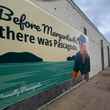
Look south from Beach Boulevard on a clear day in Jimmy Buffet’s Pascagoula and sometimes you can see well enough to know it’s there. Maybe a cloud stands static above it. Maybe a dark vertical line hints at trees, or pale horizontal suggests beach. Even among those who know of the island, that vista is about as close as most folks come. But to the indoctrinated—in the grand scheme, the fortunate few—Horn Island is sanctuary, and sacred to those who chase fish there.
The island, some 10 miles long and about a mile wide, is designated wilderness and part of the federally protected Gulf Islands National Seashore. It is remote. Isolated. Just out of reach. But accessible to those who want it badly enough. Famed painter Walter Anderson incessantly rowed there to his muse and camped under his 10-foot wooden boat. Contemporary painter, Stig Marcussen, likewise finds his inspiration there. I dare you to go once and return unchanged.
The island marks the meeting of the muddy Mississippi Sound and the blue Gulf waters. What swims there? Whale sharks for one. And anglers can find redfish, speckled trout, flounder, sheepshead, tripletail, cobia, jack crevalle, Spanish mackerel, tarpon, red snapper, grouper, amberjack, sharks and far more.
To get there, you’ll need a boat to make the journey across the Mississippi Sound. Even among the regulars to Horn Island, few fish it with a flyrod. But from the time we conceived of this trip that was my aim.
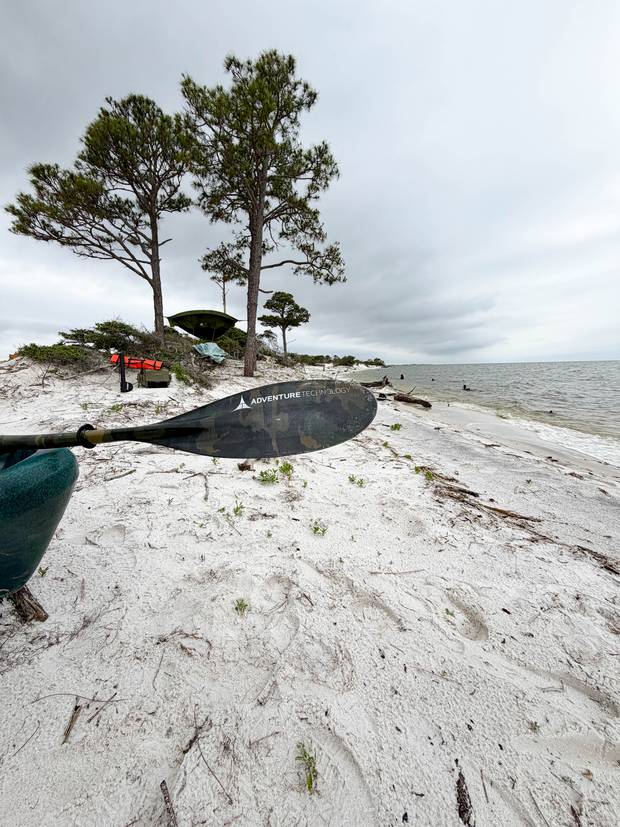
Jason Lewis and I got to the town of Pascagoula by water, but it’s faster to drive. We had just paddled the 84 or so mile length of the Pascagoula River—which The Nature Conservancy calls, “The largest undammed river in the contiguous 48 states. And while originally intended to paddle another eight miles right on out to the barrier island, imminent 30 mile an hour head winds and small craft advisory sobered those plans. We had a tight window before I had to head back to Virginia and no indication that weather would be changing anytime soon. So after a night’s rest at Hotel Whiskey and a supper at Scranton’s, we instead loaded our kayaks and their gear onto my buddy Matthew Mayfield’s Eagle Point Oyster Company boat and our buddy Reef steamed south with the wind at our back. High tide let us slip up tight to the beach.
More Like This
By this time, Jason and I had our camp set up down pat and in little more than a beat my hammock was hung and his tarp was set. He headed west on foot. I paddled east with my 8-weight in my lap. Exploring the island was job one. Job two: Find a feeding fish and cast to it. No blind casting for me thank you very much. The how was as important as the what.
The kayak rolled and rocked in the chop from the north wind, but a deep canal angled from the Sound into the heart of the island, and I took it. And it was a new world. Salt lakes. Marsh. Ponds. Lagoons. Calmer waters but exploding with life. Ospreys, sea birds, and shore birds. And for me, the species of most concern was the 14-foot alligator the salty old guy at the boat launch told me about. I hadn’t seen a big gator in years and an intimate encounter with a dinosaur always leaves you appreciating your thumbs, metallurgy, and metacognition.
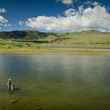
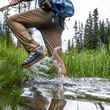
The weather was coming, but I pretended otherwise and paddled every inch of every path, pushing through tight marsh grass paths and testing the kayak’s draft and, in time, the falling tide as I tickled over oyster beds. Fish fed here and there, working the surface, fat hog bodies as exposed as they were submerged. Sprays of minnows here. Swirls of predators there. And the flyrod begged attention. So, despite my intentions, I stepped out of the boat, tied it to my belt, and waded, sending imperfect casts into perfect scenes, willing a toad of a red or a door mat of a flounder, catching only a flounder on light tackle, and a rod-bending ray on fly.
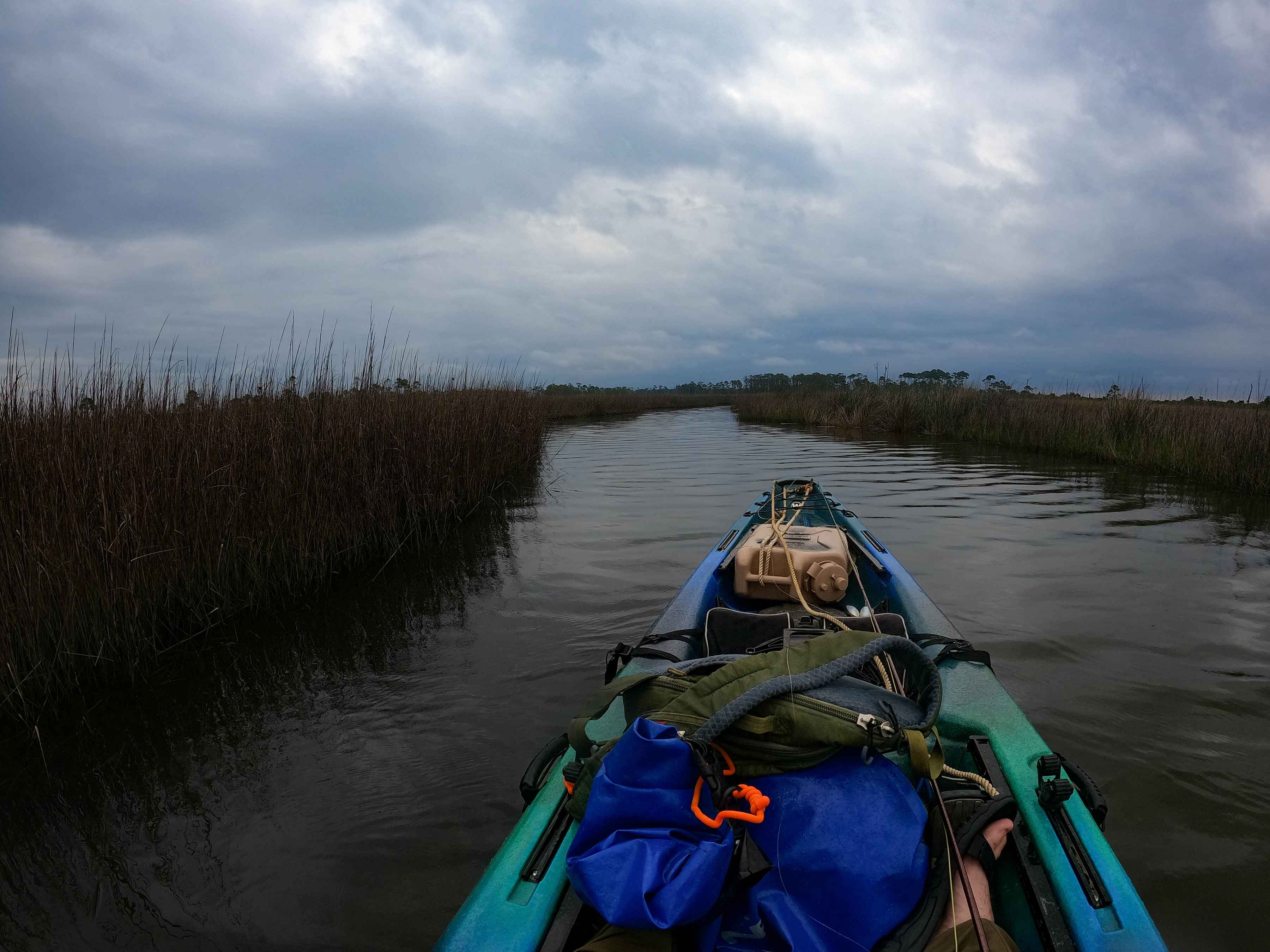
The black sky just north of me. That’s what finally sobered me up. The lakes were no longer flat and easy, but alive with wind-driven waves fighting my return to the mouth of the canal. There, despite my best efforts, I had to step out of the boat, slide my feet to bump the cruising sting rays and pull the boat along the shoreline and over a spit of beach back toward camp.
The gale popped and snapped and ripped my hammock, scattered Jason’s camp. The rain soaked my sleeping bag and our plans. Temperature dropped and dropped faster. And the storm wasn’t even started yet.
Dolphins, Jason said, I swam with dolphins. This on his 10-mile walk to the Gulf side of the island.
The storm came hard now and from both the horizon and the radar two things were clear: this was not the half of what was to come and our visitor would be here a while. These were hypothermic conditions; but we had the gear and the experience, so we just had to make the right decisions. Jason and I each donned wools, fashioned impromptu sleeping quarters, nose low and small and tight to the lee of vegetated sand lumps, sealing the edges of our tarps with pounds of sand to keep out the rain and in the body heat. The storm delivered. Lightning. A deluge. 30 mile an hour wind. Plenty of call for mid-night sit-ups and sailor’s curses.
Thirteen hours later we emerged from our respective cocoons, warmed ourselves with a fire, coffee, and oatmeal, and prepared for Reef’s return. Our window was closing fast, so we had to soak in the last of the island while we could. Smell the sea and feel the sky. Watch the marsh grass sway and listen to ospreys celebrating their catch. Study the film for signs of tailing red or the horizon for working birds. Committing it all to memory.
The oyster skiff rolled and bucked as we loaded the kayaks and our gear. And the rodeo continued on the run back into Ocean Springs as we powered into the face of the waves and slammed hollow in the troughs, salt mist spraying, faces tight and aching in the cold and the smiling, talking in bursts and nods about Horn Island and all the fish that are awaiting our return.
But for now, the time there was the rarest thing: enough.










Comments