Articles

The Colorado River basin is running out of water

Not everyone is happy with the government's solution
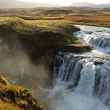
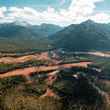
Lake Powell’s water level hit a record low of 3,520 feet this month. The minimum level for the lake to generate power at Glen Canyon Dam is 3,490 feet. The minimum level for water to be able to flow past the dam is 3,370 feet (photo: Jiří David, World Meteorological Organization / CC BY-NC ND 2.0).
The Colorado River and its reservoirs, which supply water for about 40 million people and 30 tribes across seven states and two countries, is drying up. Lake Mead on the Arizona-Nevada border, which has the largest storage capacity of any reservoir in the United States, hit its lowest recorded levels on 7 August.

Tenkara is the best and easiest way to learn to fly fish

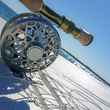
It eliminates all mechanical parts and honors the little willow branch rod many of us grew up with
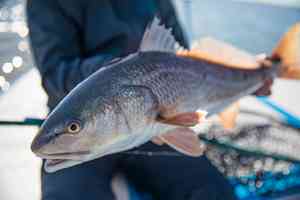
Photo: Earl Harper.

Memories remain over 65 years since my younger brother, Tom, and I stood by a lovely trout pond on a misty Michigan morning. He, then a skinny 9-year old towheaded kid. Me, a hefty lad a year older with long brown hair wet from walking through the fog and heavy forest to get to the pond. Dawn was coming slowly that day in the misty gloom. As we stood in the tall grasses on the bank we saw tails we were told to expect from brown and brook trout feeding in the shallows not ten feet from our spot.

A crusty old angler told us about the pond, its resident fish, and what brought the fish close to the bank to feed during early morning hours. We first ran into him filling his woody 1949 Buick Estate station wagon at the local Texaco gas station. He was standing in hip boots talking with the attendant explaining how he’d fished a “little trout pond down the road” and “taken a limit of 10 brook and brown trout,” as he pulled the fish from his creel stowed in the back of his car. My brother and I happened to be passing by at the time on our bicycles. We braked to a stop, both staring wide-eyed, having never laid eyes on a real trout. The angler chomped on an unlit cigar as he talked, and could see our eyes wide-open. “You kids wanna catch a couple of these”, he asked. “Yes”, in unison came from Tom and I.

Meeting Lefty

I knew he’d be trouble from the moment I saw him
Illustration: Bob White.

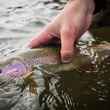
I knew he’d be trouble from the moment I saw him. He was a big guy, top-heavy, lumbering down the stairs from the jet. I stood off to the side, unnoticed, as he and the others—mostly Argentines—ambled toward the small stone building that, in 1985, served as the airport terminal for San Martín de los Andes. There was a stark disconnect between the tiny, tin-roofed hut with its small stone chimney and the large modern jet looming over it. The hand-pulled baggage cart, piled high, somehow bridged the gap.

Stuck in the middle

I’d had a terrific day. Well, up until then, at least.
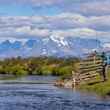
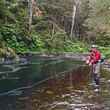
Photo: John Johnston (CC BY-SA 2.0).

The day I met Hoppy Patterson, my right leg was buried to my onions in a murky mix of sand, silt, clay, and river water. I’d been sucked down about forty minutes before that, and in the meantime, had removed my vest, tossed my rod to dry ground, found a stick, and started to write Babe a goodbye note in the sand.

The Yellowstone terrestrial countdown

Relief is coming for the West's trout, here's how to make the most of it
Photo: Chad Shmukler.

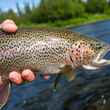
Every year, starting around the end of the first week of August, the folks who live from one end of the Greater Yellowstone Ecosystem to the other begin to count the days. This year is no different. It’s been a long, hot, smoky summer — as most summers have been over the last decade and a half or so, and as most of us who’ve lived here for any length of time predicted after a “winter” with virtually no snow — and we needed a break. Generally speaking, that relief tends to show up sometime in the middle of August. This year, the reprieve arrived on Aug. 13.

Pages