
One of my favorite stories my grandfather used to tell me took place in the late 1940s and the 1950s. As a young man, he and his buddies would drive from their farmland homes on the windswept prairies of eastern Colorado to the canyon country of the state’s south-central region. They’d stop in Denver for breakfast, and do their best to make it to Fairplay for a potty break. Then, they’d bust it through South Park and stare down the Collegiate Range above Buena Vista. From there, they’d hump it down the Arkansas River to Poncha Springs (or, if you’re a visiting tourist from points south, “Poncho Sprangs”), where they’d take the sketchy, two-lane U.S. 50 over the aptly named Monarch Pass.
From atop the pass, a wide, sweeping valley sliced in two by Tomichi Creek leads off to the West and, at the time, the tiny village of Gunnison, which had to have felt like a million miles from anywhere. Even today, Gunnison, now a large-ish small town of 6,500 souls, is a solid four-hour sojourn from Denver, and that’s if you forgo the Fairplay poop stop and don’t get sucked into the Poncha Springs and Salida artsy-fartsy traffic. But back then, in a four-banger Chevy pickup geared so low that it probably felt like you were flying across South Park at 55, the drive from just short of the Nebraska border to Gunnison was probably pretty close to 10 hours.
“We’d always find the cheapest motel in Gunnison,” my granddad used to say. “I remember we paid $4.50 for a room and we split it four ways. Two guys got the beds. The short straws got the floor. They got an extra night in their sleeping bags.”
The following morning, they’d roll out of bed and walk over to the W Cafe (still going strong for anyone interested in a legit chicken-fried steak) for coffee and breakfast, and then they’d drive about 30 miles to the west through sleepy little villages, like Iola, Cebolla, and Sapinero, to where the Gunnison left the cottonwood bottoms and the typical sage brush sea of the high desert and disappeared into one of the most magical places anywhere: the Black Canyon.
This pay-your-dues fishery, in the 1950s, enjoyed mythical status — like honest-to-God, “one day, if I’m lucky, I’ll fish the Gunnison” status. Think of it as every trout angler’s Nirvana. Bristol Bay-type stuff. And, in the 1950s, it was likely just as arduous to get to Gunnison as it is to get to King Salmon today. This area was the breadbasket of Colorado fly fishing, and before the flood waters of progress backed up the river at the present-day dam site, the fishing along the Gunnison — not just in the canyon — was the stuff of legends.
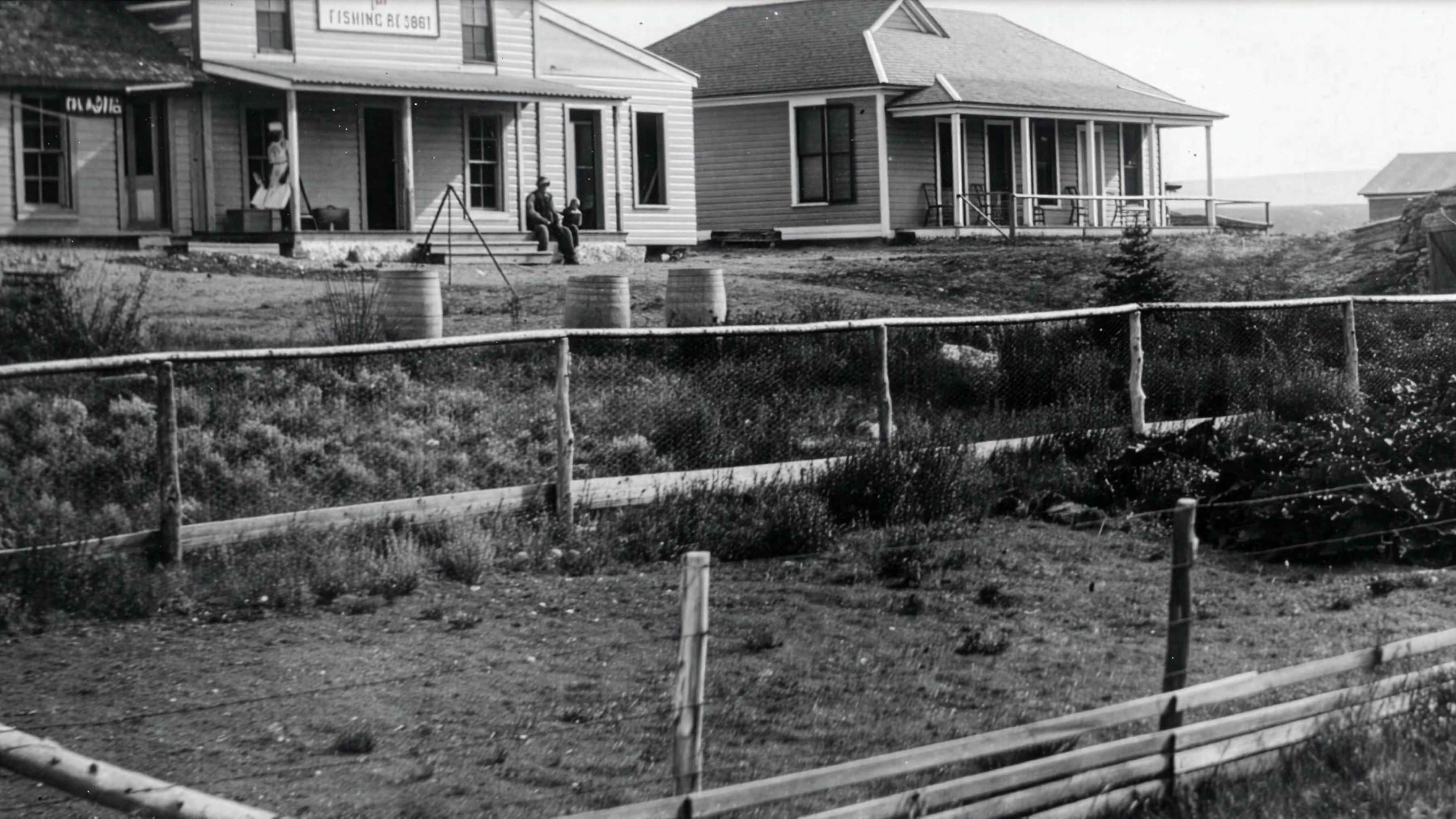
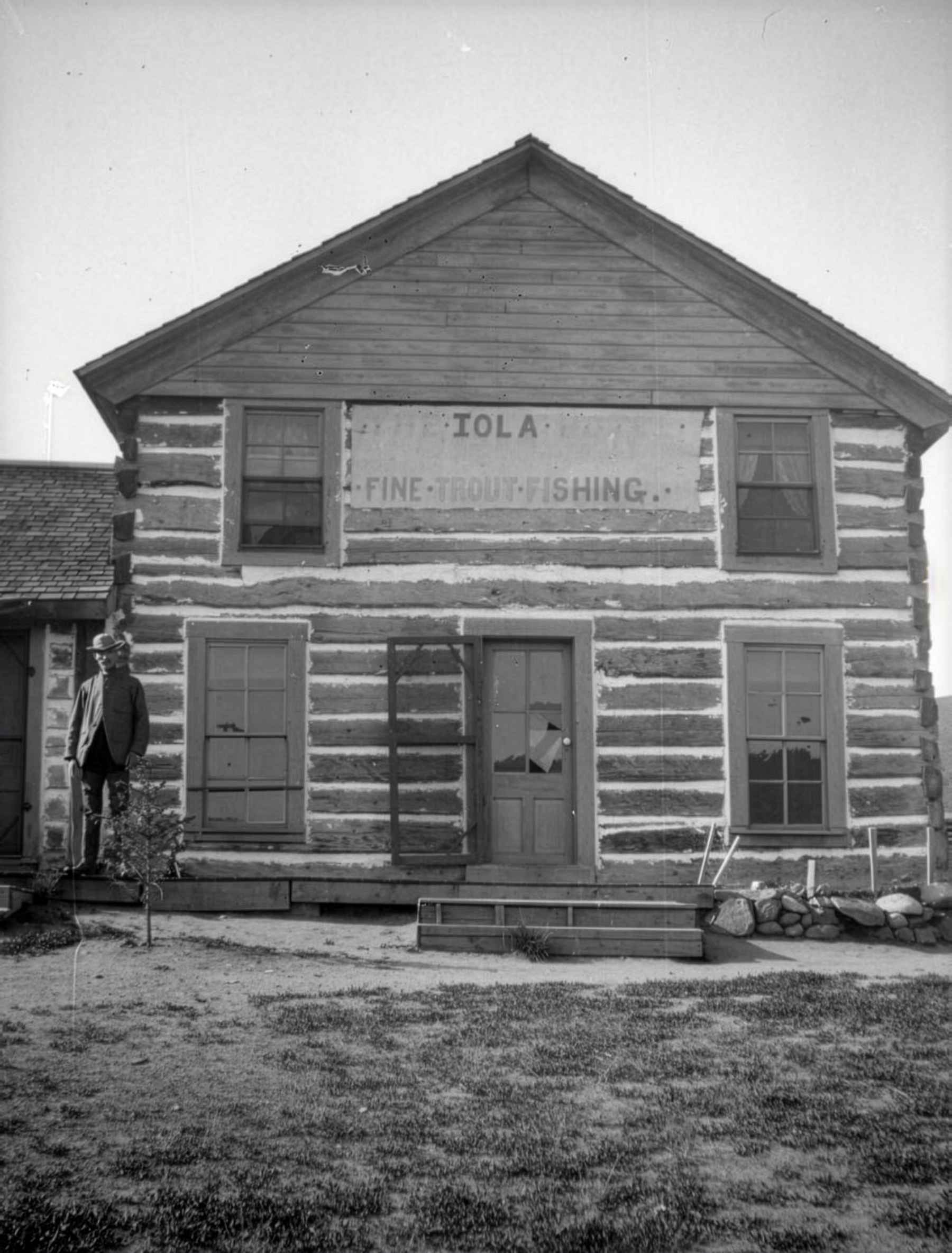
Before it was flooded, the Gunnison River through Iola, Cebolla and Sapiero was a stellar high-country river surrounded by hay meadows and alfalfa fields, ringed by the West Elk Mountains to the north and, off to south, the north San Juans. Fishing lodges and dude ranches offered river access, and trophy trout were the norm, not the exception. It was a slice of angling paradise that today is but a watery memory that only a very few can realistically recall.
The area could be accessed via the Denver & Rio Grande Railroad — its tracks paralleled the mighty Gunnison as it flowed out over the steppe country and offered a high-elevation, big-water fishery that might not be respectably matched by any storied western river today. The closest, in terms of scenery and water? Perhaps the lower Beaverhead or the Big Hole north of Dillion, Montana, comes closest. In fact, I’ve always remarked that Dillon and Gunnison are kin — both are cold and windswept in the winter and as close to perfect once the spring thaw is in the rearview mirror. Both are home to small, liberal arts universities. Both have solid downtown bar scenes. Both are situated near ambitious water storage projects — Blue Mesa for Gunnison and Clark Canyon for Dillon. I’m drawn to Dillon and its fishy wares, and I know why that is.
But Gunnison Country, with its cold rivers and stunning backdrops, its miles and miles of trails and high-country public lands, and its still-magical trout fishing … I don’t visit in person nearly enough, but my dreams take me there often.
“We’d fish all day that first day,” my grandfather told me of his trips into the canyon. And he told me tales of epic trout, of massive rainbows that would explode under dry flies or, if the artificials failed, an unlucky grasshopper plucked from the riverside rocks and pierced to a size 12 snelled Eagle Claw hook and just flipped into the current of the cold, clear waters of the upper canyon would almost always draw a strike. Then, when the sun, whose light made it to the bottom of the canyon for just a few hours, even at the peak of summer, disappeared behind the sheer cliffs looming over the river, the group of wandering die-hards would make camp, play cards around the campfire, drink a little whiskey, and crawl into their wool “all-weather” sleeping bags and count the stars above one of the longest, most narrow, and deepest canyons on the planet.
“I’m not kidding, Chris,” I remember him saying time and again — for a good story is always worth telling again — “We’d wake up in the morning with frost on our foreheads.”
That, of course, is a part of Gunnison’s overall climatic mythology that endures to this day. The town of Gunnison sits at nearly 8,000 feet in elevation, and its windswept location near the confluence of Tomichi Creek and the Gunnison puts the town in a “hole” in the sagebrush sea that just seems to collect the worst of the high-country weather. Billed as the coldest place in the country (and, for communities its size, it’s usually right up there with other perennial ice boxes like International Falls, Minnesota, or Stanley, Idaho, that sits at the base of the Sawtooths), Gunnison and the surrounding area is still a summer retreat for Front Rangers looking to escape the ever-more-frequent “heat domes” that tend to settle over the West these days.
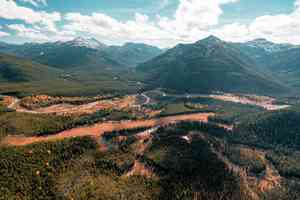
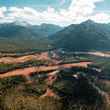
Those regular summer trips to Gunnison continued for decades — my grandfather passed almost 20 years ago, and my uncle and his family still head to the high country around Gunnison for summer escapes. But much of what my grandfather fished after coming home from the South Pacific and WWII in the 1940s is gone and now covered by the waters of Blue Mesa Reservoir. The dam, constructed between 1962 and 1966, flooded an angler’s paradise and created Colorado’s largest lake. Now, there are three dams on the Gunnison — Blue Mesa, Crystal, and Morrow Point — all built to hold back irrigation water and supply hydropower to the region. The river as it moves between the dams is still an excellent tailwater, but the thigh-busting hikes miles into the canyons require some serious “want-to.” The lower stretch through Gunnison Gorge is probably the best remote fishing float in the Southwest. The upper canyon is gone, hidden beneath the green waters of the reservoir.
I never saw a free-flowing Gunnison. I first arrived late in the summer of 1989, after serving a largely self-imposed tenure at a Mississippi community college after partying my way out of a small, but reputable, Southern university. I found what I was after in Gunnison, and what was then Western State College (now Western Colorado University) — a small liberal arts institution where I could regain my academic standing and chase the trout that thrived from one end of the Gunnison River drainage to the other.
The Gunnison basin had one thing going for it that, today, seems overlooked as the entire Colorado River basin deals with the ongoing impacts of climate change: the water up and down the valley remained dependably cold, even on the warmest summer days. And after spending the better part of four years in the valley, I don’t think I ever saw a 90-degree day. At least not that I can remember. Those days happen now, and they happen more frequently. And this past winter was the worst snow year in the Gunnison Valley’s recorded history. Like many places in the West, what was … was. What it is now is yet to be determined.
For anglers, or neophyte fly casters who consciously moved to the valley to kill two birds with one stone — one academic and the other purely soul-replenishing — the Gunnison we knew isn't the Gunnison we see now. If you would have told me that, in just 35 years, the mountains around Gunnison would lose their snow cover 55 days earlier than they did when I was fortunate enough to wander the halls at good old Western, I wouldn’t have believed you. Sadly, Gunnison, even at 7,700 feet above sea level, isn’t immune to climatic chaos. Even though last year’s dismal winter is being labeled as a 1-in-140-year event in terms of the lack of snowfall in the upper reaches of the Colorado River Basin, Gunnison Valley’s long-term romance with winter has been steadily souring. The same is happening all over the West. Gunnison is but a heartbreaking example of both progress and the changes that come with it.
I frequently tell my friends that, if I’d had the means, I might never have left the Gunnison Valley. But as a newly graduated English major with an emphasis in journalism (the ultimate vow of perpetual poverty), I had to wander away from the place that gave me so much and asked for so little in return. And I miss it, every single day.
Even now, I yearn for a crisp September morning spent wandering the creeks and the trails of Taylor Park, hoping for a few trout to come to hand before fall slips away and the valley’s notorious winter descends like a shroud. I loved fall in the Gunnison Valley. My class schedule was perfectly crafted to make the most of my surroundings — four classes on Mondays, Wednesdays, and Fridays. No class on Tuesdays and Thursdays. Fishing days.
No, it’s not what it once was, but, in this instance, I could make a case for “shifting baseline syndrome.” I never saw the Gunnison my grandfather experienced after he came home from the war rattled and likely afflicted by a severe case of undiagnosed PTSD. But the Gunnison I remember, as I matriculated through the halls of “Wasted State College” back in the day, was absolutely magical. For those there now, who don’t know any better, I suspect Gunnison is every bit the paradise it was for me, my uncle, and my grandfather.
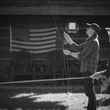
For those interested, though, there is a chance to reconnect the Gunnison River with its past. With the ongoing drought persisting across the West, the waters of Blue Mesa Reservoir have receded dramatically, and there’s no telling if and when they’ll ever again fill the lake to its brim and creep up the river toward town. But the receding waters are revealing the old town of Iola. Today, anyone willing to wander a bit can see about 15 old foundations, and the cement flagpole base that bears the signatures of Iola schoolchildren and the brands of some of the long-flooded cattle ranches and dude ranches that once lined the river.
For an even richer experience, check out Shelley Read’s Go as a River, a best-selling novel set in Iola before the flood. It’s a great story set in a magical place that, today, only exists in the form of old photographs and the memories of a precious few who can recall the river before it flooded.
Me? I’ll always have the Gunnison I remember, and I’ll keep going back through dreams of dancing trout and glorious fall days too damn perfect to spend in a sophomore English class. That’s my baseline. That’s my Gunnison.











Comments