

Memories remain over 65 years since my younger brother, Tom, and I stood by a lovely trout pond on a misty Michigan morning. He, then a skinny 9-year old towheaded kid. Me, a hefty lad a year older with long brown hair wet from walking through the fog and heavy forest to get to the pond. Dawn was coming slowly that day in the misty gloom. As we stood in the tall grasses on the bank we saw tails we were told to expect from brown and brook trout feeding in the shallows not ten feet from our spot.
A crusty old angler told us about the pond, its resident fish, and what brought the fish close to the bank to feed during early morning hours. We first ran into him filling his woody 1949 Buick Estate station wagon at the local Texaco gas station. He was standing in hip boots talking with the attendant explaining how he’d fished a “little trout pond down the road” and “taken a limit of 10 brook and brown trout,” as he pulled the fish from his creel stowed in the back of his car. My brother and I happened to be passing by at the time on our bicycles. We braked to a stop, both staring wide-eyed, having never laid eyes on a real trout. The angler chomped on an unlit cigar as he talked, and could see our eyes wide-open. “You kids wanna catch a couple of these”, he asked. “Yes”, in unison came from Tom and I.
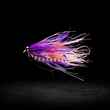
“Just take this road back along the lake a mile then the cutoff trail to the country road to the bridge, walk downstream along the creek to the pond and you’re there. The fish will feed until the sun hits the water then hide until dark, so get there early. They will be feeding on wigglers”, he continued as he reached up to the sheepskin fly patch on his fishing vest and removed a couple hooks with bits of fur attached. “Here, take these flies, they will work, cast them out and move ‘em just a bit, with a 4-6 inch tug.” He paid his bill and drove off leaving us with hopes of catching our first real trout the following morning.
And, there we were, 5am the next morning, just as he recommended. We could see fish tailing along the shallows, feeding peacefully in front of us. Our shoes were wet and muddy. I could see the willow branch, the crude tenkara-style rod we’d cut, along with 10 feet of monofilament line tied on the wispy end of the branch. Tom’s right hand held a firm grip on the pole, his left held the “wiggler fly” the old man told us would work. I noticed him shivering in the cool misty morning breeze. Time stood still.
Tom swung the fly out letting go of it as the branch carried both the short line and fly near the fish. He let the fly hit the water and sink not 2 feet from the closest tail. Then, slowly raising the branch rod and ten feet of line to bring the fly up towards the surface. I could see Tom’s eyes widen and his toothpaste grin spread as a fat 6-inch brook trout grabbed the fly and made for deeper water. It never stood a chance. Tom skidded it to shore where we both pounced on it. Mom said when we left our summer home early that morning, “don’t be late for lunch”, we weren’t hungry. We were as happy as any kids could be!
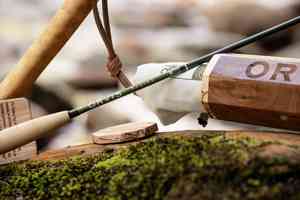
Tenkara’s century old techniques were perfect for our learning simple fly fishing that day. Much more effective for two youngsters than anything that has come from the high-tech fly fishing industry over the years. Learning to fish with a tenkara rod and short line is the easiest way to learn to fly fish. It can be taught to a 6-year old kid in a few minutes. It is intuitive. Put a beginning angler on a riffle with a soft hackle fly and they will out fish their dad or mom the first day. Catching fish from the start is the only way to turn anyone on to fly fishing from the beginning. Plus, seasoned anglers will become better fishers by applying the lessons learned from this simple tenkara method when fishing their regular gear.
Other than learning to fish where the fish are, the most important thing an angler can do to catch fish is to control the action of the fly. Too many anglers are so fixated on delivering long casts that they end up presenting the fly beyond where the fish are. Plus, with long casts they cannot control what the fly is doing. And if fishing dry flies in moving water they cannot keep track of their fly, or defeat drag—the dry fly fisher’s biggest dilemma. Using tenkara, these important tools and skills are quickly accomplished, by anyone.
I fished several times with Ed Zern, one of the finest outdoor writers of our time and noted conservationist. Ed had not previously fished with tenkara, but was anxious to give it a try. Shortly before he passed away of Parkinson’s disease we fished tenkara side-by-side on a local, and famous spring creek. The stream is noted for its big, selective brown trout. Ed and I worked the water slowly, at what he called “a snail’s pace”, covering only a couple bends in an hour. Upstream of us were the owner of the water we fished and a world famous angler who could cast his entire fly line. We could hear them bantering back and forth as we watched the caster boom out 80-foot casts. More than once we heard the owner yell, “set, set … you missed another big fish … shorten your casts … keep a closer eye on your fly”. Neither Ed nor I ever saw the angler hook a fish that morning while Ed hooked 5 great browns and landed four between 16-19” and lost a couple. Ed delivered his short-line, pinpoint accurate casts and twitched his hopper while keeping a close eye on his fly. And, with his Parkinson’s disease, tenkara was the perfect method for him to fish.
Ed wanted to take a break so we sat on the bank and watched a pair of huge trout rising to pale morning dun mayflies emerging in the currents not 20 feet from our perch. I noticed Ed’s hands trembling and shaking from the disease as he struggled to hold on to his rod. He looked my way and caught me watching, and said, “I shake more and more each day, but it keeps my wristwatch wound.” We shared a laugh, then he asked, “suppose we can hook one of those monsters?”
“We are going to try,” I exclaimed as I switched his fly from a Dave’s Hopper to one of my #18 Pale Morning Sparkle Duns, adding a long pull of 6x tippet.
“6x tippet … what should I do if one of those big fish takes my fly and runs the 20 feet of line and leader to the end of this tenakra rod?” Ed said after a deep breath.
I told him if that happened, to pitch the rod into the creek. I explained that big fish, when hooked, usually run around their living room, not out of it, and that we’d most likely land the big trout in the end.
Ed’s first presentation was perfect. Two feet upstream and just inside from the largest brown. We held our breaths. The big hooked-jawed male slowly rose and took the fly. Ed did not have to set the hook, the big fish bolted and set it on its own. Since Ed was near the end of his line I yelled for him to throw the rod, and he did, pitching the rod into the creek. We watched the fish run along the near bank followed by a 3foot high leap in front of us. All the while, Ed sporting a wide smile under his full white beard. After a short time, I waded in and retrieved the tenkara rod, giving it back to Ed and told him to put some pressure on the fish. We both watched as the trout circled a few times in the deep part of the pool then came to hand. I will never forget Ed’s smile.
Last summer, I worked with 8 youngsters from our local school during their “Learn to Fly Fish Day” on Bear Creek, a tiny freestone creek nearby. We rigged tenkara rods with short 8-foot lines, affixing them to the end of the rod. We then tied 4 feet of 4x tippet to the end of the line followed by clinch-knotting a #14 Royal Wulff. We demonstrated to the kids how to present a short cast after spreading them out along a meadow stretch of the creek. Before we could pick up our fly box and tippet spools, loud screams came from the group. Everyone of our students took trout that day; beautifully native west slope cutthroats. All of the kids remain keen anglers, having learned to fly fish that day by the tenkara method, one that is intuitive for youngsters who all quickly pick it up. Just put a tenkara rod in their hand and tie on a fly for them. Within minutes they are screaming with excitement hooked up with their first trout.
A week later, Lefty Kreh called me. I wasn’t home to take his call but he left a message. “Hey Craig, I get it now, we gotta talk about this tenkara thing, call me back.” Earlier that year when we talked about tenkara, Lefty had reservations about promoting the rods and simple method. He felt it wasn’t the way to bring young people, or beginners into the sport. Yvon Chouinard, my fishing buddy, and I had designed a couple tenkara rods with the Temple Fork Rod Company and had just launched our program. Lefty had worked with Temple Fork for several years and when he first heard about our tenkara program called to let both Yvon and I know his negative feelings about the program.
I returned Lefty’s call later that day. On the first ring he picked up stammering, “Craig, I was wrong, we gotta get together and talk tenkara, it's a great way to get folks into fly fishing. Can I come out and meet up with you and Yvon for a day or two on the river?” A week later Yvon, Lefty, Mark Harbaugh, Patagonia’s then Director of Fly Fishing Products, and I met on the banks of the Henry’s Fork River near Ashton, Idaho. When I drove up to our meeting spot I could see Lefty dancing around in tennis shoes working with a tenkara rod yammering away with Mark. Yvon and I walked into Lefty’s excitement. He was extolling the benefits of tenkara and how he now agreed that it would bring young people and beginners into our sport with its simplicity, ease in learning, low cost, and efficiency. “Ya, you guys told me so, now let’s fish and get to work on things … time’s wasting”. Lefty in his late years on the rivers became a huge tenkara ambassador.
I work with Todd Tanner’s wonderful School of Trout program where instructors share their knowledge, passion and experiences with students. Many of the students ask, “how can I get my spouse or friends into fly fishing?” I recommend introducing beginners with the simplest of all methods, a rod with a line on the end to illustrate how to control the fly without the complexity of modern equipment in the way. This is where tenkara excels; delivering the fly where the fish are feeding with a simple roll cast, controlling drag, presenting pinpoint accurate short-line casts, and easily observing a dry fly when fishing one, or swinging a soft hackle. Anglers will catch more fish using tenkara’s simple method and knowledge in an artful way. Fly fishing at its most basic brings anglers close to the simple truths of the sport and allows those picking it up to soon graduate to a rod and reel to be a complete angler. They will enjoy their time on the water, and importantly, they will catch fish — I guarantee!








Comments
Anonymous replied on Permalink
Great piece, but it’s “tow” headed.
Mel Church replied on Permalink
I agree with you Craig. With Tenkara and its limitations it's made me study the water more and slowly stalk the trout so I can cast from a closer distance. I control the fly better and have more fun. Great way to fish for panfish and fight them on a limber Tenkara rod. I started with a cane pole when I was a kid and my Dad put me where I could catch fish when I was 5 years old. I was sold on fishing from then on.
Doug replied on Permalink
I don’t use Tenkara rods because I’m a beginner. I use them for the fly only presentation. All that fly line and indicator flog the water and disconnect the angler from the fly. The euro nymph crew is basically Tenkara fishing with a shorter heavier rod and a reel.
Pages