
The day I met Hoppy Patterson, my right leg was buried to my onions in a murky mix of sand, silt, clay, and river water. I’d been sucked down about forty minutes before that, and in the meantime, had removed my vest, tossed my rod to dry ground, found a stick, and started to write Babe a goodbye note in the sand.
I’d had a terrific day. Well, up until then, at least. The fish were next to the logs, in undercut banks, deep holes, and shallow runs. I hooked so many I lost count. Lost count of the ones I landed, too. I ate lunch on a sandy bank, shaded by a remarkable maple tree. A few of the leaves had already turned red, prompting a less existential sort of chicken-and-egg question. The sandwich was tomato and cheese on sourdough bread, with mayo. The real stuff. “Those preservatives aren’t good for you,” Babe always told me.
Another hundred yards and I’d have been able to see the bridge. They say half of all car accidents happen within five miles of home. Three-quarters within fifteen. Mostly due to complacency, distraction, a false sense of security, and, of course, the fact that that’s where you spend most of your time on the road.
I don’t know which it was for me. Probably complacency with a good bit of distraction mixed in. I’d see a mayfly floating and fluttering above the river. Then, one, two, three, . . . bang. Picked off by a light-brown cardinal with a touch of yellow and red at the tips of its tail and wings. Cedar waxwings, actually, but having grown up in southern Illinois, the black masks and punk-rock hairdos reminded me of cardinals.
I’d stepped in muck before. Many times. But this was different. Down, down, down I went, kinda like on the dance floor in college when the DJ played “Rock Lobster.” Down, down, down.
More Like This
I had zero experience with quicksand, other than a few scenes I’d watched in cartoons, movies, and TV shows. Jonny Quest. Scooby-Doo. Gilligan’s Island. Those sorts of things. Based on them, I figured I was in a holding pattern, and soon, my hat would be floating atop the spot where gravity had interred my body.
How do you start a goodbye note? I wondered.
Dear Babe, As I sit here, stuck in the Middle Branch, writing this note with a branch, I think of all the times you told me to be careful. I don’t remember if you ever told me to watch for quicksand, but you probably did. You were always one step ahead of me. Though you wouldn’t want to be one step ahead of me today. If you were, you’d be in this hole instead of me. I could pull you out, of course. But you don’t like to fish, and would probably never be here, so that doesn’t make any sense.
I could see her reading it.
“Seriously?” she’d say. “You think the thing about me not liking to fish is the part that doesn’t make any sense? Did you read the rest of your note? That is not what a goodbye is supposed to say.”
She’d be right, of course. Better to just tell her how much I’ve always loved her and how, like Jack Nicholson told Helen Hunt in As Good as It Gets, she made me want to be a better man.
“I think you’re taking that low-profile thing a little too far,” the man said. “You can almost get that low by hunkering. It’s a lot easier and not nearly so dangerous.”
He was somewhere behind me, and because turning around in quicksand is a lot harder than you might think, he needed to walk around in front before we could do a proper introduction.
“Hoppy Patterson,” he said.
“Glad to meet you,” I said. “I’m Tim. But folks call me T.J.”
“How long have you been stuck, T.J.?”
“Forty minutes or so.”
“Good,” he said. “That means you’re done sinking. The only concern we have is darkness, or if the river comes up for some reason.”
“I’m not sure how to get out of here,” I said.
“Oh, we’ll dig down to your knee,” he said, “then gnaw your leg off there. That’s the way wolves and coyotes do it.”
“What?”
“Come on, T.J.” he said. “It’s a joke.”
Hoppy moved around behind me again, but this time close enough to touch my shoulders.
“Lean back, relax, and just let your leg kinda float upward. Don’t pull on it.”
“Hey, that’s working,” I said.
“Wolves and coyotes aren’t good at relaxing,” he said. “That’s why they gnaw. Relaxing is a lot better.”
“I agree,” I said.
“How can I repay you?” I asked.
“No need,” he said. “Just watch your step a little better around here. Especially when you see sand on these inside bends. One of those wading sticks can help. Just poke the ground in front of you before you take your next step.”
“Wading sticks are for old men,” I said.
“Or for young men who want to get old,” Hoppy said.
That’s when I saw the tattoos, one on the inside of each forearm. He had a clown on his left that looked like the old Red Skelton version. Not scary or chaotic. More sentimental in that gentle tramp-clown way. On his right was a joker in the style you see on playing cards, wearing a two-point jester cap.
His backpack was one of those waxed-canvas Duluth packs with rivets, broad leather straps, and sturdy buckles. Worn and lived in, though. It wasn’t for show. A folding saw stuck out from one of the pockets. He had two rod cases strapped to one side of the pack, and an ax lashed to the other.
“Oh, this?” he said when he saw me staring. “You know what they say in the Boy Scouts, right?”
“Right,” I said.
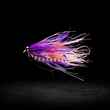
“Look at that,” Hoppy said, looking at the fly hooked to one of the guides on my rod. “That’s a Harold’s Hopper, isn’t it?”
“Yes,” I said. “Bought it at the hardware store.”
“You’re off to a good start,” Hoppy said. “Keep with it, and you’ll get better, for sure.”
“Huh?” I asked.
“You haven’t been fly fishing for long, have you?”
“No,” I said. “How can you tell?”
“You still have the plastic covering over the cork on your rod,” he said.
“Isn’t that there to keep it clean?” I asked.
“Well, yes,” Hoppy said. “But only before you start using it. It’s like that plastic sheet on the front of a new TV. You can take it off now.”
“Looks like you have a nice rod there,” I said.
“The same guy who tied your fly made this rod,” Hoppy said.
“He made it?” I said. “What does that mean?”
“Well, he didn’t build the blank. He wrapped all the guides and glued on the grip and reel seat.”
“Does he sell them?” I asked. “Like his flies.”
“If you get to know him. Best rods you’ll ever cast. He also makes bamboo rods from scratch, so if you ever feel like you have too much money in your pocket and need to get rid of some, you know.”
“How was the fishing?” Babe asked when I got home.
“You make me want to be a better person,” I said.
“What?”
“It was fine,” I said. “I met a guy on the river. He offered to teach me more about fly fishing.”
“You didn’t give him our bank account numbers, or anything like that, did you?” she asked.
“I’d have to know our numbers to do that,” I said.
“What are you going to do if I die before you?” she asked.
“Most men die before their wives,” I said.
“But most women aren’t married to you,” she said.
“Ha ha,” I said.
“What?” she said.
“I think I need a new fly rod,” I said.
“Need is a relative thing,” she said. “You’re likely confusing it with desire.”
“There’s a guy in town who makes rods,” I said. “Nice ones.”
“How many poles do you think you’ll need for this fly fishing?”
“They’re called rods,” I said. “I’ve told you that before, and, anyway, I’m actually getting pretty good at fly fishing.”
“Oh, you are?” she said. “So, where are all of these fish you’re catching? You fly anglers do call them fish, right?”
“Hoppy sent you, eh?” Harold Firkus asked.
Harold’s blue jeans were covered with a conglomeration of oil, wood dust, and mud. He had on a flannel shirt, tucked into his jeans and secured by a belt with eight more notches than it needed. Despite his thin frame, I could tell he was strong. Especially when he shook my hand.
He lived in an old farmhouse with the largest woodpile I’d ever seen about a hundred yards behind it. I thought Hoppy was messing with me when he said NASA used it to calibrate their satellites, but seeing it in person, yeah, they might. No question about it, if that thing ever caught fire.
“Yeah,” I said. “He told me you might have a fly rod I could buy.”
“What are you looking for?”
“Just a normal rod,” I said. “Nothing special.”
“What weight works for you?”
“I’m not in a big hurry,” I said. “I can wait as long as it takes for you to build it.”
“No,” Harold said. “What weight rod are you looking for?”
“Oh, yeah,” I said. “I forgot about that weight thing. What are my choices?”
“How about an eight-and-a-half-foot five-weight?” Harold said. “I think that would be perfect for you.”
“That makes sense,” I said. “Pretty much what I was thinking.”
“I have it in my shop, so there’s no wait for that one.”
“I thought you said it was a five,” I said.
“Good one,” Harold said.
“Yeah,” I said. “Ha.”
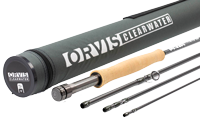
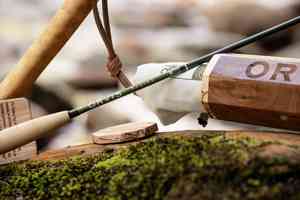
Harold’s rod was terrific. Looking back, I know I looked like a beekeeper fighting off a colony coup when I cast it, but even so, I could feel the difference. And it had his initials right there on the rod, just above the grip. A grip that did not have any plastic on it, I might add.
I tied on one of Harold’s Hoppers—he gave me a dozen with the rod—and found trout everywhere they should be on the Middle Branch. A few more leaves in the maples had reddened, and the smell of woodsmoke from a distant cabin filled the air. It was a glorious day, the kind Longfellow had in mind when he wrote about a beautiful spirit breathing its mellow richness in the clustered trees.
I had a peanut butter and jelly sandwich under the same tree I’d had the tomato and cheese about a month before. No mayo on this one. Though I did know a kid who used to eat his PBJs with that stuff back in Southern Illinois. Another kid put pickles on his. Sweet ones. Kids like us might have grown up forty-some years after the depression, but we weren’t completely out of its shadow.
When I was sixteen and sporting a brand new driver’s license, my uncle sent me to the store in his Ford Courier pickup to get some ice. The truck had a stick shift, and though I had experience using a clutch on my Kawasaki 125, I was nervous as hell driving there and back. So nervous that after I paid for the ice, I got in the truck and drove to my uncle’s without the bag.
Another time, in my twenties, I was at a bar with my cousin and borrowed his Courier—which used to be my uncle’s—to make a money run to the ATM. When I returned, I parked it on a different street, and when it was time for us to leave, we couldn’t find the truck, so we called the police and reported it stolen.
I tell you both of these stories to counter the suggestions that what I’ll tell you next is evidence of an early-onset cognitive disorder. No, this is just who I am and who I’ve always been.
I don’t know what had distracted me, exactly. It could have been the bald eagle atop the white pine off in the distance. Or the mink scurrying to and fro along the bank. Maybe the flock of flickers I flushed on my shortcut through the woods at the big oxbow. It’s not easy to explain how it happened, but whatever it was that had stolen my attention from the simple task of hiking alongside the river had vanished at the precise moment my left foot entered the hole and began being sucked down, down, down.
Sitting there, contemplating all the things I had contemplated before, it hadn’t been thirty minutes, probably not even twenty, when I heard a familiar voice from somewhere behind me.
“You have got to be kidding me,” the man said. His voice was familiar. So were the tattoos.









Comments
Craig Wieland replied on Permalink
Tim, This is excellent. I've been sucked into my share of muck as well. I remember once on Nelson's Spring Creek in Montana when I literally could not move. I was standing there when some guys walked by and just smiled at me, knowing my predicament. I smiled back and politely waved...very embarrassing. Looking forward to December. Craig
Anonymous replied on Permalink
Ha ha nice. That was a fun read . Keep it up!
Pages